Other Writing by Robert Louis Stevenson
Memoir of Fleeming Jenkin, 1888

Fleemin Jenkin Read the Virtual Book

Summary

RLS wrote Memoir in tribute to his professor of engineering at Edinburgh University, Henry Charles Fleeming Jenkin. For more biographical information on Jenkin, see the page dedicated to him in the Friends section of website.

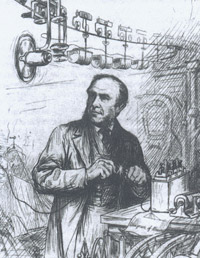
In Memoir, RLS discusses Jenkin’s family ancestry in detail, outlining their careers. He then tells the story of Jenkin’s life – his birth, early childhood, studenthood, marriage, and his accession to Chair at Edinburgh University. Stevenson also focuses on Jenkin’s professional triumphs, including his invention of telpherage (a system of using electricity to transport vehicles or goods).

The work indicates RLS’s strong feelings of admiration and affection for the stern and dry-humoured Jenkin. While Stevenson was often inclined to treat all professors as a joke he respected Jenkin and was anxious about disappointing him: “he was simply a man from whose reproof one shrank” (p. 280).

Read more...
 
Father Damien: An Open Letter to the Reverend Doctor Hyde of Honolulu from Robert Louis Stevenson, 1890

Father Damien Read the Virtual Book

Summary

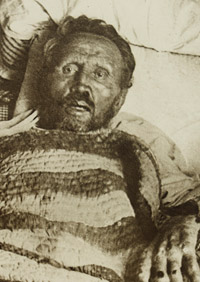
Father Damien (Damien de Veuster, 1840-1889) was a Roman Catholic missionary from Belgium. He went to the leper settlement at Molokai in 1873, where he helped the sufferers of the disease. Damien himself contracted leprosy and died of it in 1889.

RLS’s pamphlet, Father Damien (March 1890) was a response to a letter from Reverend C.M. Hyde published in The Presbyterian newspaper on 26 October 1889. In the letter, Dr Hyde criticized Damien’s work at the leper settlement, which Stevenson took umbrage with. RLS was outraged that what he perceived as Damien’s selfless work with the lepers could be censured.

RLS’s response was deeply scornful, attacking Hyde personally. Indeed, his pamphlet was filled with such vitriol, he was convinced (wrongly) that he would be sued for libel.

Read more...
 
A Footnote to History: Eight Years of Trouble in Samoa, 1892

King Mataafa Read the Virtual Book

Summary

Fascinating not only as an account of Colonial skulduggery and duplicity but also as a background to Stevenson's great South Seas tales – “The Beach of Falesa” and The Ebb-Tide - this is possibly RLS's most unjustly neglected book.

Immediately alert to the variety of South Sea culture and the damage done to it by rapacious whites, RLS quickly became passionately interested, and involved, in the attendant political machinations. These involved the three colonial powers battling for control of Samoa - America, Germany and Britain - and the indigenous factions struggling to preserve their ancient political system. It is a tale as old as Columbus and as new as this morning's papers.

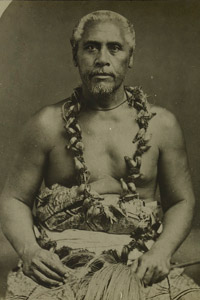
RLS was squarely on the side of the Samoans fighting for their preferred king, Mataafa - to the extent of participating in raids and skirmishes with them - while the foreign powers insisted upon imposing a puppet ruler; a type of conflict which is all too familiar today.

Read more...
 
Records of a Family of Engineers, 1896

Records of a Family of Engineers
Virtual Book

Summary

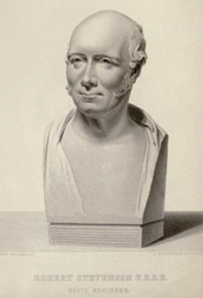
Stevenson was working on (what would be posthumously called) "Records of a Family of Engineers" from the early 1890s until his death. This unfinished piece focuses on RLS’s grandfather, Robert Stevenson (1772-1850). “Records” is a discussion of the Stevenson family history and their achievements in lighthouse engineering. For more information about the Stevenson lighthouses, see the lighthouses page in the Footsteps section.

In the first section, RLS investigates the family name. He traces its history and the people who bore the name from the thirteenth century to the nineteenth, concluding: “on the whole, the Stevensons may be described as decent, reputable folk, following honest trades – millers, maltsters, and doctors, playing the character parts in the Waverley Novels with propriety, if without distinction; and to an orphan looking about him in the world for a potential ancestry, offering a plain and quite unadorned refuge, equally free from shame and glory” (“Records of a Family of Engineers”, The Works of Robert Louis Stevenson, Swanston edn vol xvi [London: Chatto and Windus, 1911], p. 7).

Read more...